Ladino History
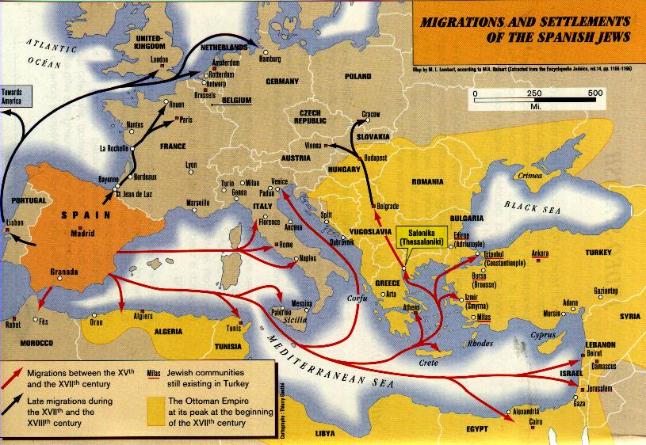
For nearly 500 years, the Judeo-Spanish language, Ladino, had been a vibrant and dynamic language, unique in its roots in Jewish heritage and Spanish culture. Ladino, with its basis in pre-expulsion Spain, flourished for hundreds of years in Sephardic communities of the Diaspora as they moved from the west, throughout the Mediterranean, to the Balkans and to the great Jewish communities of Turkey and Greece as well as in the Ottoman Empire in the east. More than merely a language, Ladino culture continues to make a unique contribution to the Jewish people through its literature, poetry, music and folklore. Ladino is a culture of emotional warmth and intellectual ferment, of commitment to Jewish identity while, at the same time, remaining open to the surrounding cultures in which Ladino speaking communities find themselves today.
Sometimes called "Spaniolish," Ladino is the Spanish-Jewish dialect spoken by Sephardic Jews. Ladino's origins are similar to those of Yiddish, in that they both combine Hebrew and local language(s). As the Ladino language developed during the 15th and 16th centuries, it grew to include Arabic, Turkish, Greek, French and Italian.
Ladino spread throughout the Mediterranean after Spain expelled it's Jews in 1492, and is currently spoken by about 160,000 Jews in Turkey, the Balkans, North Africa, Israel and the Americas.